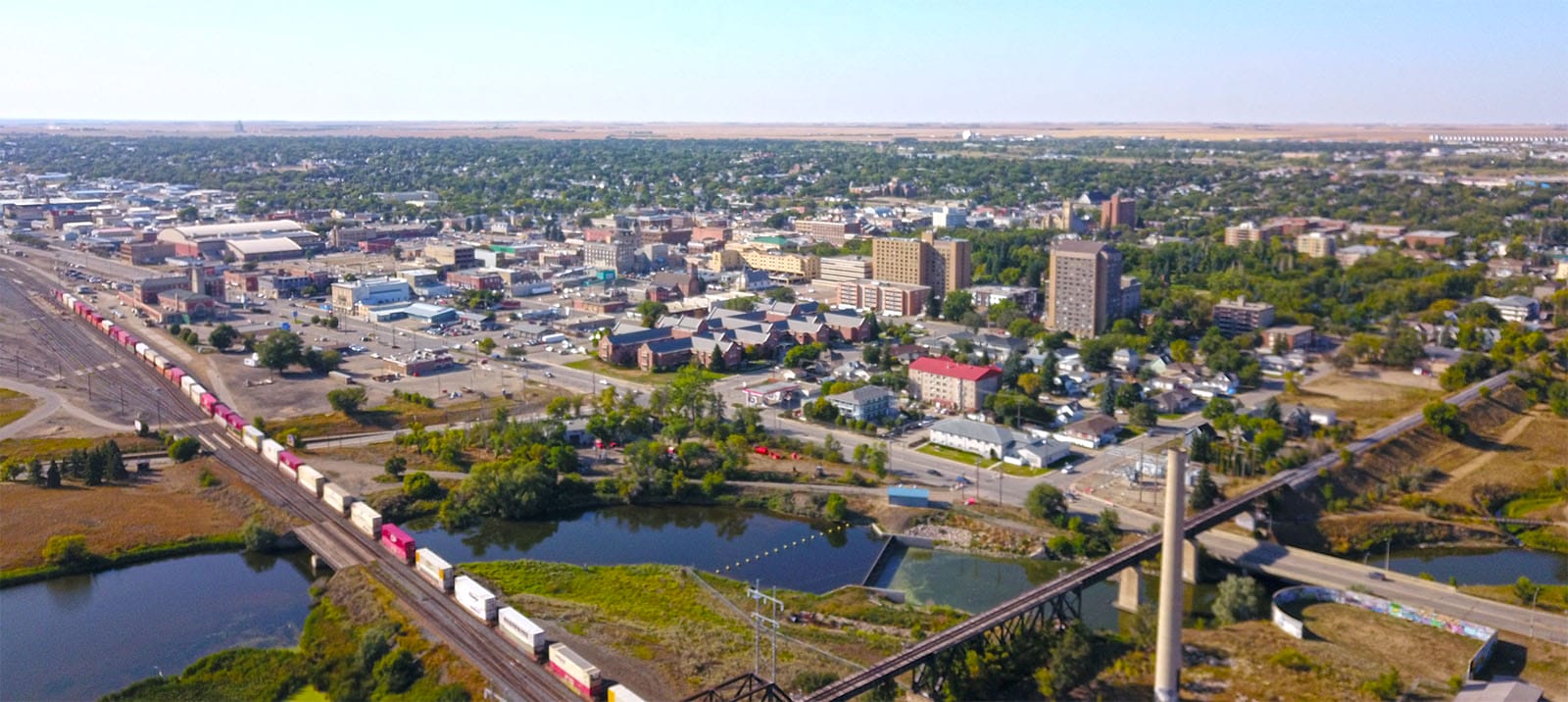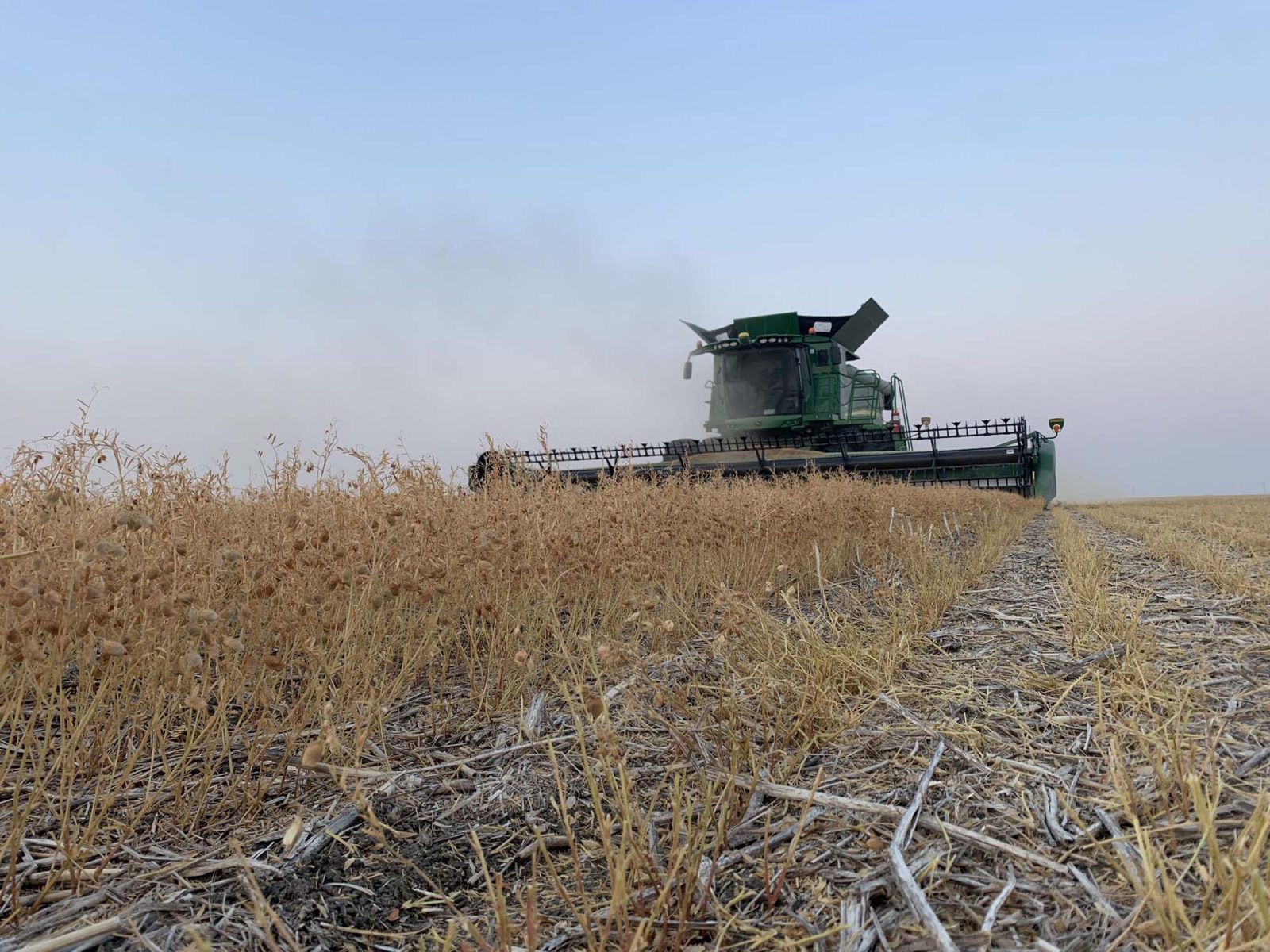
Saskatchewan is farm country. More than 36 million cultivated acres stretch from the Palliser Triangle to the parkland belt (Saskatchewan Crop Insurance Corporation), and most of those acres are still farmed by families — many on land that’s been in the same name for three or four generations. We know because we insure a lot of them. Our team at Ottawa Real Estate & Insurance has been working with Moose Jaw–area farmers since 1910, and we’ve watched the program landscape grow from simple hail policies into the layered system today’s farmers have to navigate.
This guide walks through the full picture: SCIC crop insurance, farm property and liability, farm vehicles and equipment, livestock, and the federal programs (AgriStability and AgriInvest) that sit on top of all of it. It also covers what to look for when you’re buying farm land near Moose Jaw — a growing search we hear from younger producers and acreage buyers every spring.
Saskatchewan Crop Insurance (SCIC) — the foundation
Most Saskatchewan farms start their risk plan with crop insurance through the Saskatchewan Crop Insurance Corporation. SCIC is a federal-provincial-producer cost-shared program — the governments of Canada and Saskatchewan subsidize roughly 60% of the premium, and you cover the balance.
What crop insurance covers:
- Yield losses from weather (drought, excess moisture, frost), disease, insects, and wildlife
- Established perennial forage (alfalfa, grass-legume stands) under forage and now satellite forage insurance
- Unseeded acres when conditions prevent seeding by the deadline
- Establishment Benefit when a crop fails to establish
What it does not cover:
- Price declines after harvest (that’s where AgriStability comes in)
- Equipment, buildings, livestock, or liability (separate private policies)
- Quality deductions beyond what SCIC’s grade table provides for
The deadline you cannot miss: March 31 every year to apply, reinstate, cancel, or change your crop insurance contract (Government of Saskatchewan). If you don’t act, last year’s coverage rolls over automatically — which is fine if nothing changed on your operation, and a problem if it did.
SCIC is administered by the province; we don’t sell it. But we sit down with producers every spring to make sure their SCIC coverage and their private farm policy don’t leave gaps between them. That’s the kind of cross-check a local broker is built to do.
AgriStability and AgriInvest — the income side
These are the two federal Business Risk Management programs every Saskatchewan farm should understand.
AgriStability
A margin-based income protection program. When your program margin in the current year falls more than 30% below your historical reference margin, AgriStability pays 80% of the decline beyond that 30% threshold (Agriculture and Agri-Food Canada).
- Compensation rate: 80% (raised permanently from 70% under the 2023 federal-provincial agreement)
- Reference margin limit: removed
- Fee: approximately $4.50 per $1,000 of reference margin
- 2026 enrolment deadline: April 30, 2026
- Administered through: SCIC (1-888-935-0000)
For 2026 specifically, AgriStability adjusted feed inventory valuation for livestock producers — fluctuations in on-farm-use feed are now valued more accurately, which matters a lot in dry years.
AgriInvest
A self-managed producer-government savings account. You contribute, the government matches 1% of your allowable net sales annually, and the funds are available any time for any farming purpose. A Saskatchewan grain farm with $1 million in net sales picks up roughly $10,000 a year in government matching — over a decade that’s a meaningful cushion.
How they fit together
Think of it as a three-layer cake: SCIC crop insurance protects yield, AgriStability protects margin, AgriInvest is the rainy-day account. None of them is a substitute for a properly written private farm insurance policy — they cover production economics, not the barn that burned down or the neighbour’s grandson who was hurt in the corral.
Private farm insurance — what a Saskatchewan farm policy covers
This is the core of what we write for our farm clients at Ottawa Real Estate & Insurance. A modern Saskatchewan farm package is built from a handful of coverages, mixed and matched to the operation.
Farm dwelling and personal property
The farmhouse and its contents. Functionally similar to a home insurance policy, but written inside a farm package so coverage stays coordinated.
Farm buildings
Barns, machine sheds, grain bins, granaries, quonsets, shops, corrals, and outbuildings. Each structure is scheduled at replacement cost. Older wood-frame barns and hip-roof structures need careful underwriting — some carriers limit coverage to actual cash value on aging buildings.
Farm contents and stored grain
Stored crop, hay, feed, seed, chemicals, tools, and shop contents. Stored grain coverage is particularly important — a bin collapse, fire, or theft on full bins is a meaningful loss in any year and devastating in a high-price year. Coverage limits and basis of valuation (market value vs. fixed limit) should be reviewed every fall after harvest.
Farm machinery and equipment
Tractors, combines, swathers, air drills, sprayers, balers, and attached implements. Most farm policies offer two ways to cover equipment:
- Blanket coverage — a single limit covering all listed equipment, simpler but capped
- Scheduled coverage — each major piece listed individually, broader for high-value units like late-model combines
Newer combines now routinely exceed $1 million; how a policy values them at total loss matters more than ever.
Farm liability
Often called Farmer’s Comprehensive Personal Liability. Covers bodily injury and property damage you cause as a farmer — a chemical drift incident, livestock that gets onto a road, a contractor injured in your yard. We recommend a minimum $2 million limit on Saskatchewan farms; many producers carry $5 million given the cost of a single serious claim.
Custom farming and contract operations
If you do custom seeding, custom spraying, or custom combining for neighbours, that needs to be declared. Standard farm liability often excludes commercial custom work — it needs its own endorsement.
Pollution and chemical drift
Limited coverage by default. If you store or apply significant volumes of fertilizer, anhydrous ammonia, or crop protection products, talk to us about pollution liability extensions.
Loss of income and extra expense
Pays continuing expenses and lost income if a covered loss interrupts your operation — a shop fire mid-seeding, for example. Often overlooked.
Farm vehicle insurance in Saskatchewan
Saskatchewan farm vehicles run through SGI Auto for the basic plate and registration, but there are important distinctions for farm use:
- F-class plate (Farm Truck) — for trucks used primarily in the farm operation, with reduced premium relative to commercial plates
- PA-class (Private Passenger) — for the half-ton or SUV used for both farm and personal trips
- Class IF (Farm Implement) — for self-propelled equipment moving on the road
The SGI plate covers basic third-party liability and collision. Most farm operations need additional coverage above SGI minimums — higher liability limits, all-perils on newer trucks, and farm-equipment road coverage when moving combines and air drills between fields. That sits with a private insurer and is typically bundled into the farm package.
A common gap we find: producers running grain trucks for custom hauling or commercial loads who never upgraded from an F-plate. One serious accident under the wrong plate can void coverage entirely.
Equipment breakdown coverage
This is the coverage most underrated by Saskatchewan farmers and the one we recommend most aggressively. Equipment breakdown — sometimes called boiler and machinery — covers sudden mechanical or electrical failure of equipment that standard farm property doesn’t:
- Grain dryer controls and burners
- Bin aeration fans and motors
- Grain leg motors and elevators
- Standby generators and large electrical panels
- Refrigeration units and bulk milk tanks
- Computerized monitor systems on shop equipment
A burned-out grain dryer control board mid-harvest, with a yard full of tough wheat, is the kind of claim that pays for years of premium.
Livestock and ranch coverage
For cattle, hogs, sheep, and poultry operations:
- Mortality coverage — death of livestock from named perils (fire, lightning, accident in the yard, sometimes disease)
- Livestock Price Insurance — administered through SCIC for cattle and hogs; protects against market price declines
- Specified perils for livestock buildings — barns, calving sheds, and feedlot infrastructure
- Care, custody and control — when you’re feeding or backgrounding cattle owned by someone else, you need this; standard farm liability excludes it
The Wildlife Damage Compensation and Prevention program through SCIC compensates for predator kills and crop damage from wildlife — separate from your private policy.
What this costs
Farm insurance is highly individual — a half-section grain operation on the south side of Moose Jaw and a 12,000-acre mixed grain-and-cattle operation in the RM of Caron look nothing alike on a quote sheet. Rough orders of magnitude we see for Moose Jaw–area operations:
| Operation Type | Typical Annual Premium |
|---|---|
| Small acreage / hobby farm (under 160 acres, no major livestock) | $1,400 – $2,500 |
| Mid-size grain farm (1,000 – 3,000 acres) | $4,000 – $9,000 |
| Large grain operation (5,000+ acres, multiple yards) | $10,000 – $25,000+ |
| Mixed grain-and-cattle (medium herd) | $6,000 – $15,000 |
| Feedlot or large livestock operation | Quote-specific, typically $15,000+ |
Add to that your SCIC crop insurance premium (cost-shared with the province), AgriStability fee (~$4.50 per $1,000 of reference margin), and SGI plates for trucks and equipment. The full annual risk-management spend on a mid-size Saskatchewan grain farm typically runs in the $25,000–$50,000 range across all programs and policies combined.
Why work with a Moose Jaw farm insurance broker
When you call a single insurance company direct, you get one quote on one product. When you work with a brokerage, we shop your file across the Canadian carriers writing Saskatchewan farm business.
- Multiple farm markets in one application. We carry agency contracts with several Canadian farm-specialist insurers. Your equipment list, building schedule, and liability needs are quoted across all of them in a single intake — not one phone call at a time.
- Local underwriting knowledge. We know which markets are aggressive on older hip-roof barns, which ones write feedlots in the RM of Moose Jaw No. 161, which ones treat custom-spraying operations sensibly, and which ones will quietly decline anything north of half a million dollars in scheduled equipment.
- SCIC and AgriStability coordination. We don’t sell SCIC — but we make sure your private policy doesn’t duplicate what SCIC already covers, and doesn’t leave gaps SCIC ignores.
- Claims advocacy. Hailstorms, equipment fires, livestock losses — when something happens, we work the claim on your behalf. That’s the difference between a broker and a 1-800 line.
- Real estate plus insurance, under one roof. This is genuinely unique to Ottawa Real Estate & Insurance: when you’re buying or selling farm land near Moose Jaw, our real estate side handles the transaction and our insurance side has the new policy bound before possession.
- Annual reviews tied to your operation. Every operation changes — new combine, new section, expanded herd, kids coming back to the farm. We re-shop and adjust every year so coverage tracks the operation.
Buying farm land near Moose Jaw
A growing share of the calls we take from younger producers and returning farm kids starts with a simple question: “What’s the process for buying farm land near Moose Jaw, and how do I insure it once I have it?”
Where the land is
Moose Jaw sits in the heart of grain-and-cattle country. The RMs immediately surrounding the city — Moose Jaw No. 161, Caron No. 162, Pense No. 160, Marquis No. 191, Baildon No. 131, and several others — collectively offer some of the most productive cropland in the province alongside meaningful cattle country to the south and west.
How land sells
Most Saskatchewan farm land changes hands through:
- Private sale between known parties or referred buyers
- Tender — sealed bids on a deadline, common for estate land
- Auction — both live and online, increasingly common
- Listed real estate — listed on Realtor.ca and SaskAg’s farmland portals
Our real estate side actively handles farm land transactions in the Moose Jaw area via current listings and featured listings.
Insurance once you own it
The moment you take title, you need coverage in place. For a buyer adding to an existing operation, the new quarters fold into the existing farm policy at endorsement. For a first-time farm-land buyer who doesn’t yet have a full farm operation, we can write a standalone farmland and bare-land liability policy until the operation grows.
—
If you want, I can also do a **SEO second pass without touching content** (just:
– internal link distribution improvement
– anchor text balancing
– adding missing hub pages like `/insurance-services/`, `/personal-insurance/`, `/about/` where relevant
– improving crawl depth for Google)
Just say the word.
Farm Insurance FAQ
Talk to a Moose Jaw farm insurance broker
Whether you’re renewing, expanding, or buying your first quarter, our team can help.
Call (306) 694-4747 or email us for a no-obligation farm insurance review.
Learn more about our Insurance Services or get in touch here.